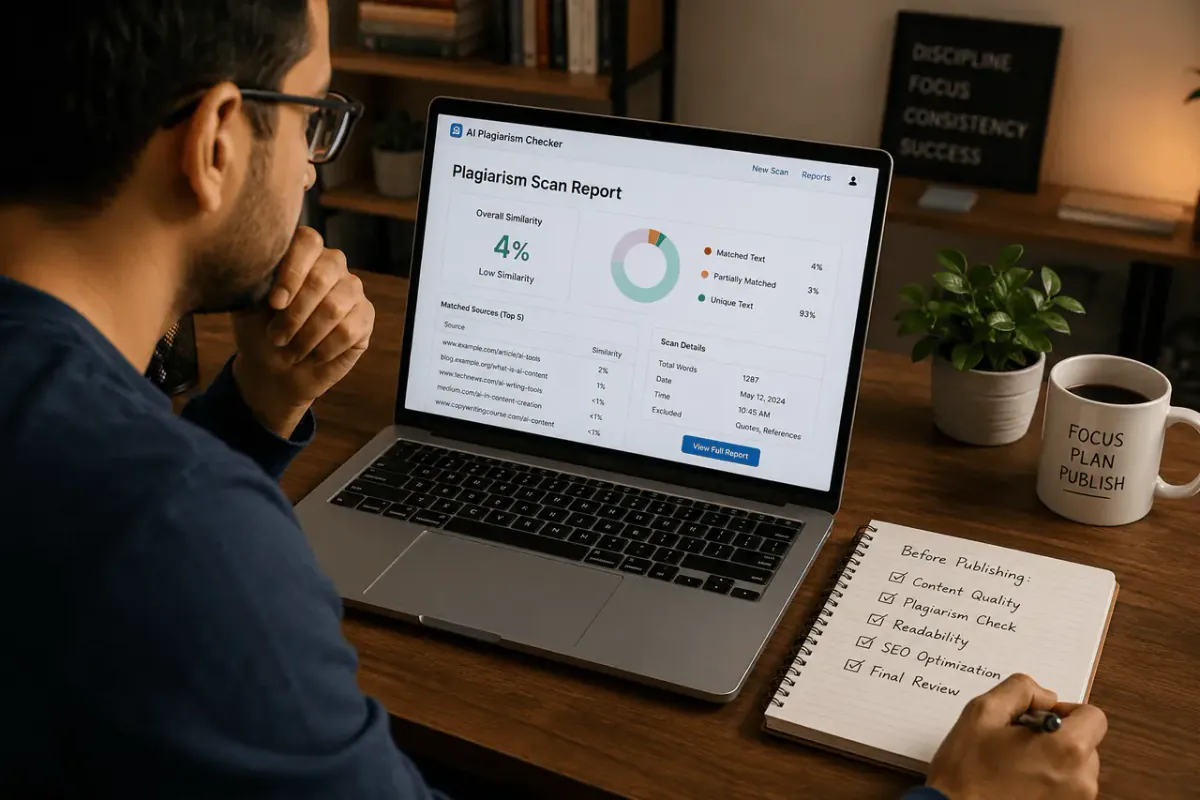
If you publish content regularly, you've probably typed "ai plagiarism checker" into a search bar at least once — usually right before hitting publish, when a nagging thought hits: does this sound too much like something I already read?
That instinct is worth listening to. Between AI writing assistants, content repurposing, and the sheer volume of text published every day, unintentional duplication is easier than ever. An AI plagiarism checker won't just protect you from accusations of copying — it protects your search rankings, your credibility, and your readers' trust.
This guide covers what an AI plagiarism checker actually does, why originality matters more than most writers realize, and how to build a quick originality check into your workflow.
What Is an AI Plagiarism Checker?
An AI plagiarism checker scans your text and compares it against a large index of existing web content, flagging passages that closely match something already published. Instead of manually copy-pasting sentences into a search engine one at a time, the tool does it automatically, highlighting overlapping phrases and estimating how much of your draft might not be original.
Modern versions go a step further than the plagiarism checkers of a decade ago. They don't just look for word-for-word matches — they can catch close paraphrasing, structural similarity, and content that's been lightly reworded but conceptually copied. That matters because a lot of duplication today isn't deliberate theft; it's accidental overlap from writing about a well-covered topic the same way everyone else has.
If you want to see this in practice, WriteBotics' Plagiarism Checker reviews matching phrases and possible duplication before you publish, giving you a clear pass before your content goes live.
Why Original Writing Actually Matters
It Protects Your Search Rankings
Search engines are built to reward content that adds something new. When a page closely mirrors text that already exists elsewhere, it has a harder time ranking — even if the copying was unintentional. Search algorithms don't know the difference between "I accidentally wrote something similar" and "I copied this." They just see duplication, and duplication rarely wins.
For example, imagine two blog posts about "email marketing tips for small businesses." One rehashes the same five generic points every other article makes, in nearly the same order. The other includes a specific example, a real numbers-based case, and an opinion the writer actually holds. Search engines — and readers — consistently favor the second, because it reads as a genuine contribution rather than a rehash.
It Protects Your Credibility
Readers can often sense recycled content even without running a formal check. Generic phrasing, familiar examples, and predictable structure all signal "I've read this before" — and that's an easy way to lose a reader's attention. Original writing, on the other hand, builds trust. It signals that the person behind the words actually has expertise or a perspective worth reading.
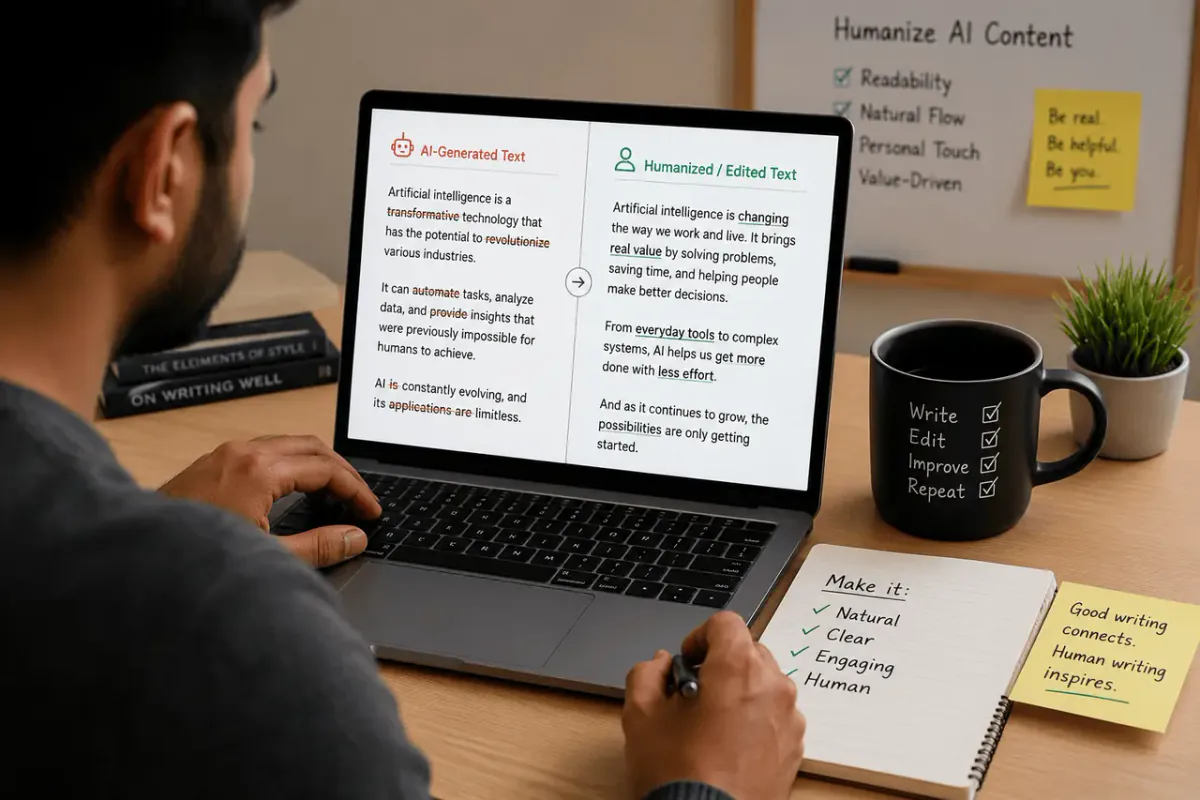
This matters even more if you're using AI tools to help draft content. AI models are trained on huge amounts of existing text, which means a first draft can sometimes lean on familiar phrasing without you realizing it. Running that draft through an AI plagiarism checker is a fast way to confirm you're publishing something genuinely yours before it goes out.
It Keeps You Legally and Ethically Clear
Beyond SEO, there's a simpler reason to check for plagiarism: it's the right thing to do. Whether you're a student, a marketer, or a freelance writer, publishing someone else's work as your own — even by accident — can create real professional and legal consequences. A quick check before publishing is a small habit that prevents a much bigger problem later.
How an AI Plagiarism Checker Fits Into Your Writing Workflow
A plagiarism check works best as one step in a broader review process, not a replacement for good writing habits. Here's a simple workflow worth adopting:
- Write your draft as you normally would, using research, notes, or an AI writing assistant to speed things up.
- Run it through an AI plagiarism checker to flag any passages that overlap too closely with existing content.
- Revise flagged sections in your own words, adding specific details, examples, or opinions that only you would include.
- Check for AI-writing patterns, especially if a tool helped draft the piece. WriteBotics' AI Content Detector estimates whether text contains common AI-writing patterns, which pairs well with a plagiarism scan for a full originality review.
- Do a final read-through for tone, accuracy, and flow before publishing.
This kind of two-step check — plagiarism plus AI-pattern review — takes a few minutes but catches issues that are much harder to fix after a post is already indexed and ranking.
What to Do When a Plagiarism Checker Flags Your Content
Getting a flag doesn't automatically mean you've plagiarized. Common topics naturally produce some overlapping phrases — there are only so many ways to explain a basic concept. When a checker flags something, treat it as a prompt to review rather than a verdict:
- Reword the flagged sentence in your own voice rather than adjusting a word or two.
- Add specificity. A generic statement is more likely to match existing text than a detail pulled from your own experience or research.
- Cite direct sources if you intentionally quoted or referenced something — proper attribution isn't plagiarism.
- Restructure the section if the overlap is more about sentence order and logic flow than exact wording.
The goal isn't to avoid every possible phrase overlap — that's not realistic. It's to make sure your content reflects your own thinking, research, and voice rather than echoing what's already out there.
Building Originality Checks Into Your SEO Process
If you're publishing content regularly, originality checks work best as a standing part of your pre-publish routine, alongside the basics: a keyword in your title and intro, clear H2/H3 headings, useful examples, internal links, and a solid meta description. Originality is what makes all of that other SEO work pay off — there's little point optimizing a page's structure if the content itself isn't distinct enough to rank or to hold a reader's attention.
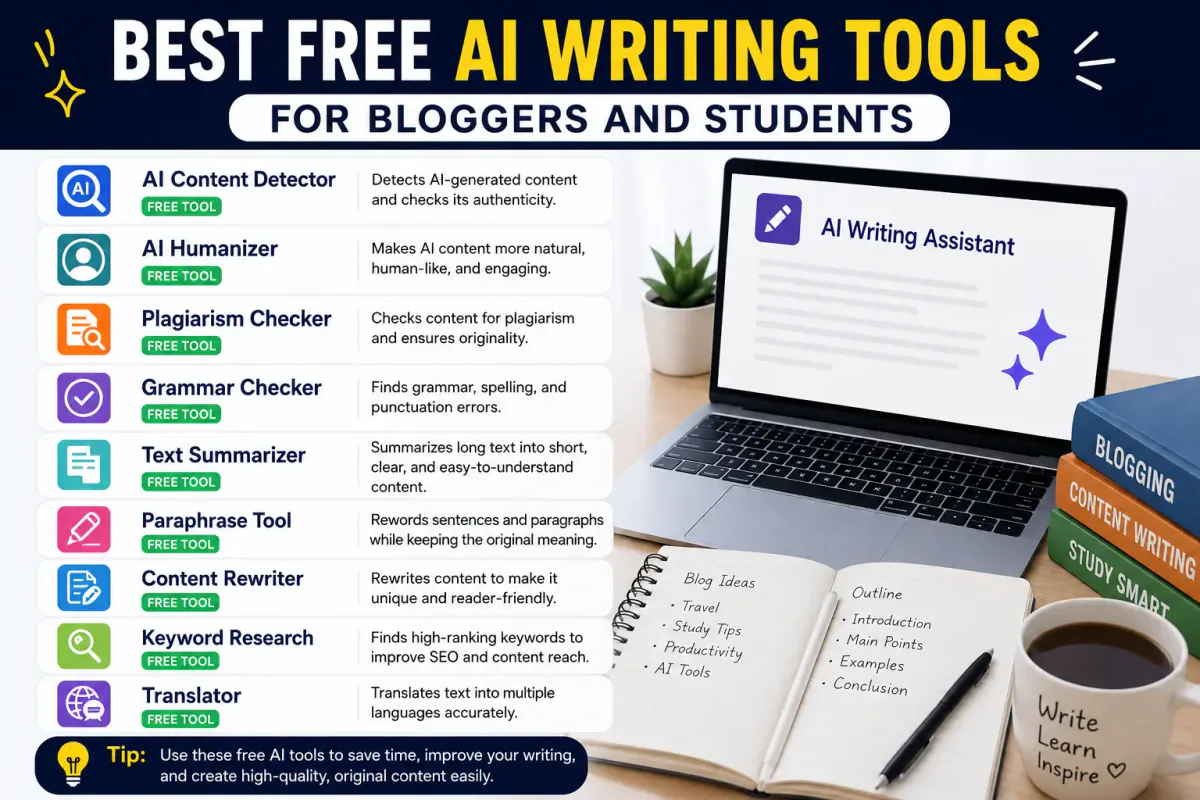
If you're building out your process further, it's worth reading how a broader AI writing assistant fits into faster, smarter drafting, or browsing other writing tools online that support the editing and review side of content creation.
Frequently Asked Questions
Does an AI plagiarism checker also detect AI-generated text?
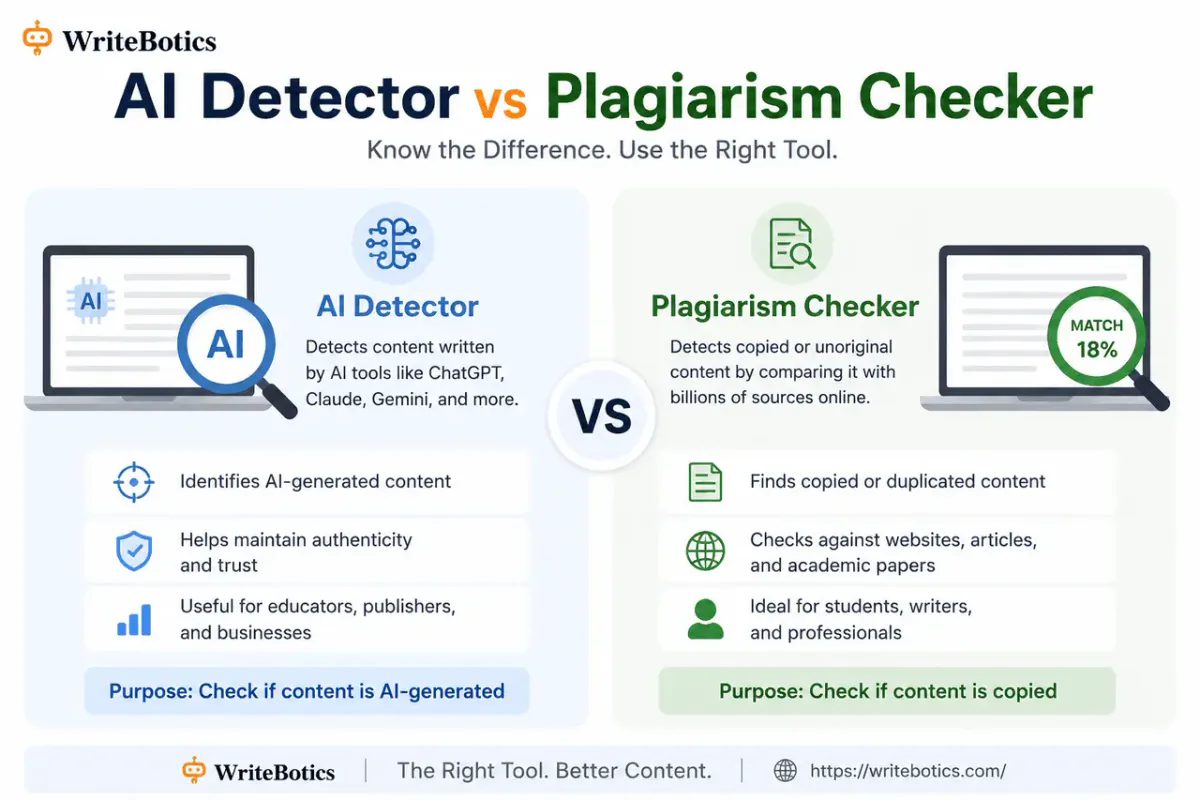
No — plagiarism checking and AI-content detection are different processes. A plagiarism checker compares your text against existing published content to find matches. An AI detector estimates whether the writing patterns look machine-generated. Many writers run both checks, since a draft can be fully original and still read as AI-written, or vice versa.
Can I use an AI plagiarism checker for free?
Many browser-based tools, including WriteBotics, offer free plagiarism scanning with no signup required. Usage limits can vary by tool, so it's worth checking the specific tool's terms if you're scanning content at scale.
How much text overlap is considered a problem?
There's no universal percentage that applies everywhere — context matters. A few matched short phrases around a common industry term is normal. Long matched sentences or entire paragraphs mirroring another source are the real red flags worth revising.
Should I check AI-assisted drafts differently than fully human-written ones?
It's worth checking both the same way, but AI-assisted drafts benefit from an extra pass, since AI tools can unintentionally echo phrasing from their training data. Running a plagiarism check plus an AI-pattern check on assisted drafts is a reasonable extra safeguard.
Is plagiarism always intentional?
No. Most flagged content comes from accidental overlap — writing about a common topic in a familiar way, or leaning too closely on a source used for research. That's exactly why a quick check before publishing is useful: it catches unintentional issues before they become a real problem. Ready to check your next draft? Try the Plagiarism Checker or explore all of WriteBotics' free writing tools to build originality checks into your workflow.