Many students sit down to rewrite a paragraph and end up just swapping a few words around. That's not really how to Paraphrase An Essay properly, though. Paraphrasing means taking someone else's idea and explaining it in your own words, your own sentence structure, and your own voice, while keeping the original meaning intact. It sounds simple, but it's one of those academic skills that takes a bit of practice before it feels natural. In this article, we'll walk through what paraphrasing actually involves, common mistakes to avoid, and a few habits that make the whole process easier.
Why Paraphrasing Matters More Than You Think
Teachers and professors don't just want a different version of the same sentence. They want proof that you understood the source material well enough to express it differently. So, when you paraphrase, you're not hiding the original idea behind synonyms. You're demonstrating comprehension.
This matters for a few reasons
- It helps you avoid accidental plagiarism in research papers.
- It shows that you can process information instead of copying it.
- It makes your writing sound more like you, rather than a patchwork of borrowed phrases.
How to Paraphrase an Essay Without Losing the Original Meaning
There's a difference between rewording and actually paraphrasing. If you only change a handful of words while keeping the same sentence order, that's still considered too close to the source. A genuine paraphrase usually changes the structure as well as the wording.
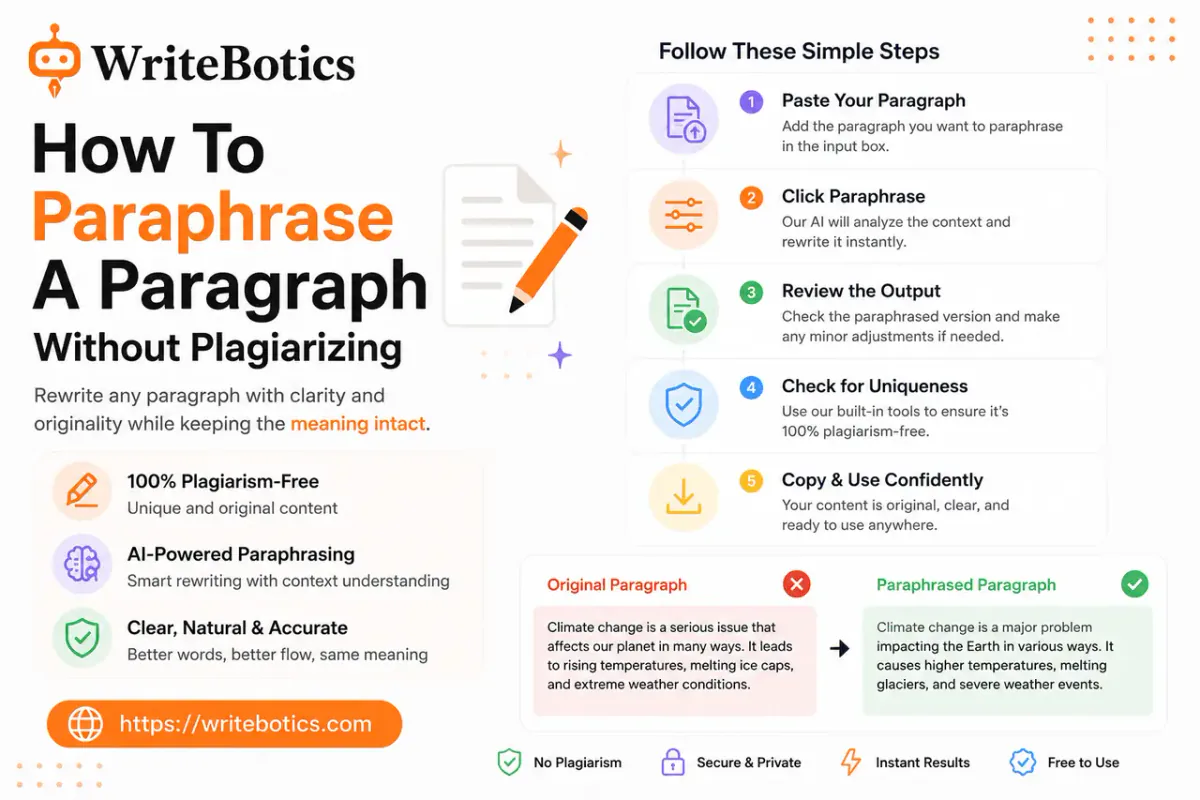
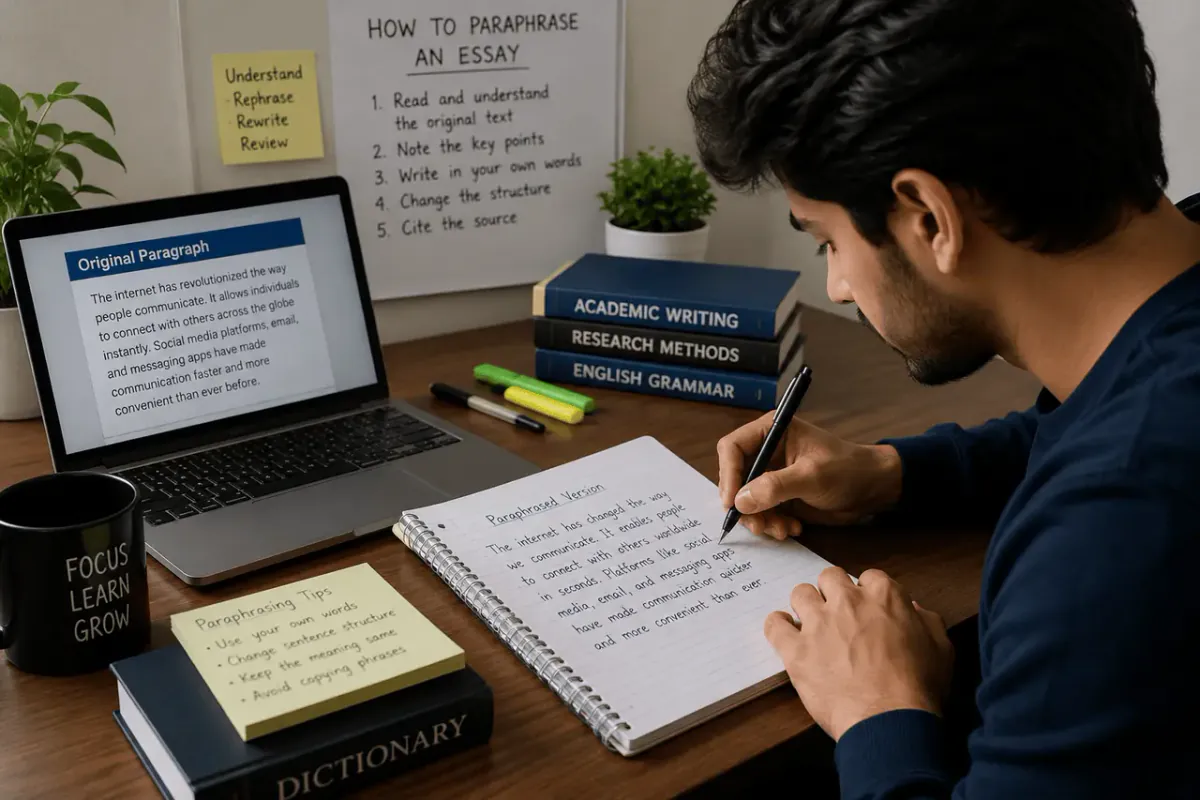
Here's a simple approach that tends to work well
- Read the original passage two or three times until you fully understand it.
- Put the source text away so you're not tempted to copy phrasing.
- Write the idea from memory, using your own sentence pattern.
- Compare your version with the original to check accuracy.
- Add a citation if the idea isn't common knowledge.
This method forces your brain to process the meaning rather than just rearranging letters. It's slower at first, but it becomes second nature after a few tries.
Common Mistakes Students Make
A lot of paraphrasing problems come from rushing. Here are a few habits worth watching for:
- Word-swapping only – replacing single words with synonyms while keeping the same sentence skeleton.
- Copying sentence length and rhythm – even with new words, matching the original structure too closely can still count as close paraphrasing.
- Forgetting citations – paraphrased ideas still need credit, even though the wording is yours.
- Losing meaning along the way – sometimes, in trying to sound different, students accidentally change what the author actually said.
If you notice any of these patterns in your draft, it usually helps to step back, reread the source, and try explaining the idea out loud before writing it down again.
How to Paraphrase an Essay Correctly Using Structure Changes
One thing that separates a weak paraphrase from a strong one is sentence structure. Instead of starting your sentence the same way the original does, try flipping the order. For example, if the source begins with the cause and ends with the effect, you could reverse it and start with the effect instead.
Also consider changing
- Active voice to passive voice, or the other way around.
- Long sentences into two shorter ones (or vice versa).
- Lists into flowing sentences, or flowing sentences into a short list.
These small structural shifts make a real difference. They show that you absorbed the idea instead of just translating word by word.
When a Paraphrasing Tool for Essays Can Help
Sometimes you're stuck on a sentence that just won't reword itself no matter how many times you read it. In situations like that, a paraphrasing tool for essays can give you a starting point, especially when you're dealing with technical or dense academic language. The key is to treat the suggestion as a draft, not a final answer. Read through whatever comes out, adjust the wording so it matches your own voice, and double-check that the meaning still lines up with the original source.
If your university or college offers a writing center, it's also worth booking a quick session there. Our guide on academic writing resources covers a few more options worth checking out, including how to combine manual paraphrasing with feedback from a tutor.
A Quick Example
Original sentence "Climate change is accelerating faster than most scientific models predicted a decade ago."
Weak paraphrase "Climate change is speeding up quicker than most scientific models predicted ten years ago."
Better paraphrase "Recent data suggests that global warming is progressing at a pace many researchers didn't expect a decade back."
Notice how the second version changes both the wording and the sentence order, while still keeping the original point intact.
Final Thoughts
Paraphrasing isn't about tricking a plagiarism checker. It's about understanding ideas well enough to explain them in your own way. Once you get comfortable reading a passage, setting it aside, and rewriting it from memory, the whole process speeds up naturally. For deeper guidance on academic integrity and citation standards, the Purdue OWL writing lab is a solid resource worth bookmarking.
With a bit of practice, paraphrasing stops feeling like a chore and starts feeling like just another part of writing well.
FAQs
1. What's the difference between paraphrasing and summarizing?
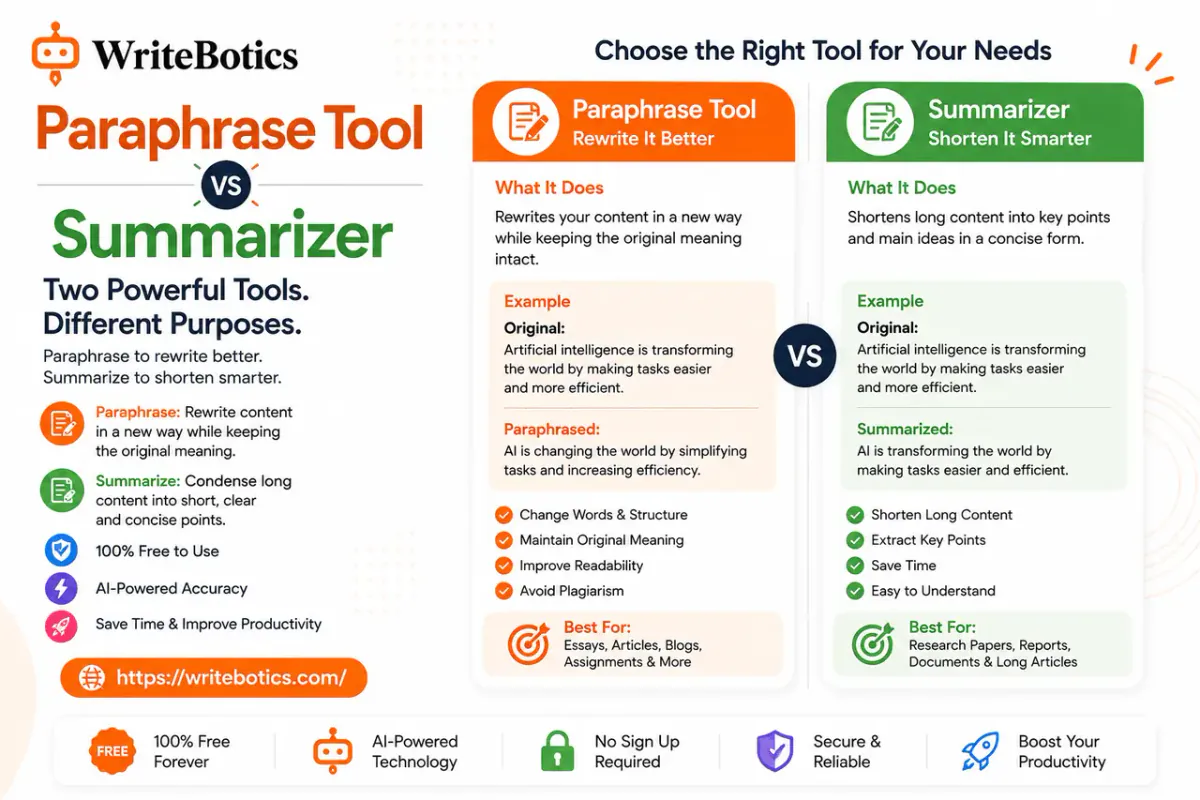
Paraphrasing rewrites a passage in your own words while keeping roughly the same length and detail. Summarizing condenses the main points into something much shorter.
2. Do I still need to cite a paraphrased sentence?
Yes. Even though the wording is yours, the original idea belongs to someone else, so it still needs a citation.
3. How many words should I change when paraphrasing?
There's no fixed number. The goal is to change both the wording and the sentence structure, not hit a word count target.
4. Can I paraphrase the same sentence more than once in an essay?
It's better to avoid repeating the same idea multiple times. If you need to reference it again, try summarizing it briefly instead.
5. Is it okay to use a paraphrasing tool for essays in college work?
It can be useful for getting unstuck, but the final wording should always be reviewed and adjusted by you so it reflects your own voice and stays accurate to the source.