Learning how to paraphrase an essay correctly is one of the most essential academic skills you'll ever develop — and one of the most misunderstood. Done right, it shows you've genuinely understood source material and can communicate ideas in your own voice. Done wrong, it becomes accidental plagiarism that can get you failed, expelled, or worse.
This guide walks you through exactly How to Paraphrase An Essay properly, what separates good paraphrasing from plagiarism, and when to use a paraphrasing tool for essays versus doing it manually.
How to Paraphrase an Essay: What Is Paraphrasing and Why It Matters
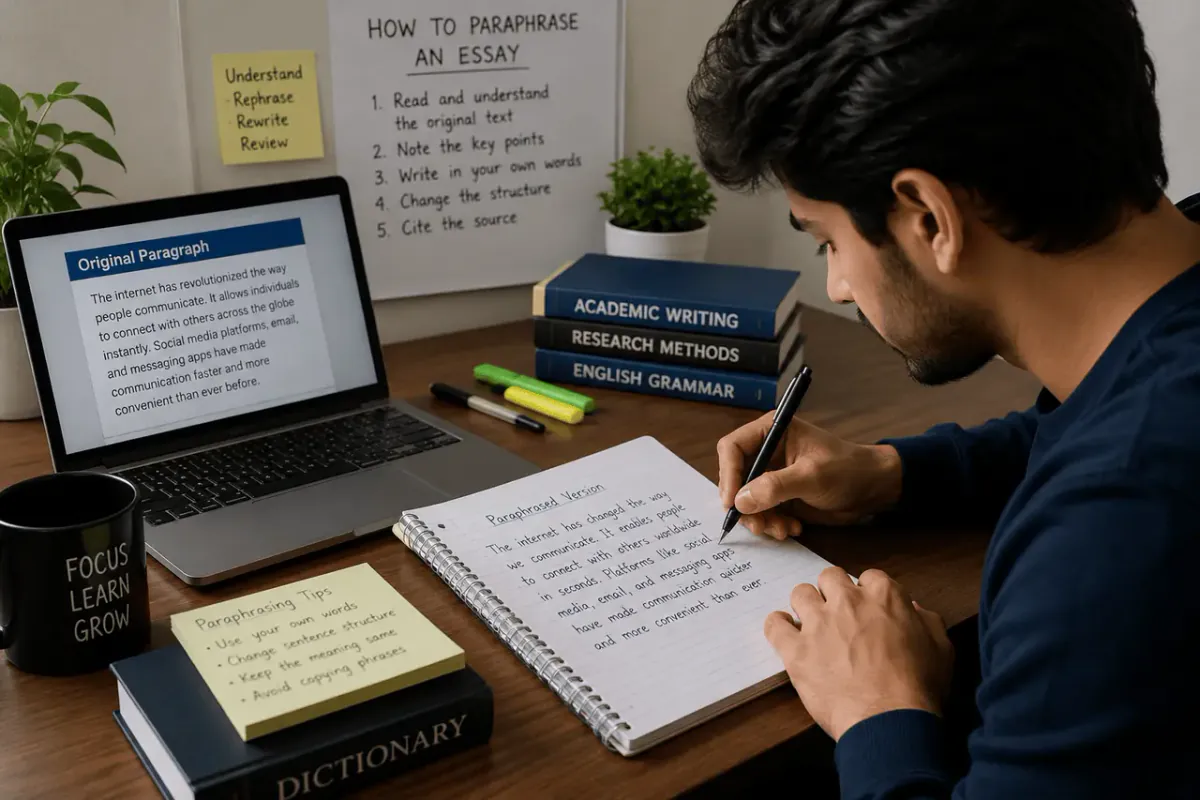
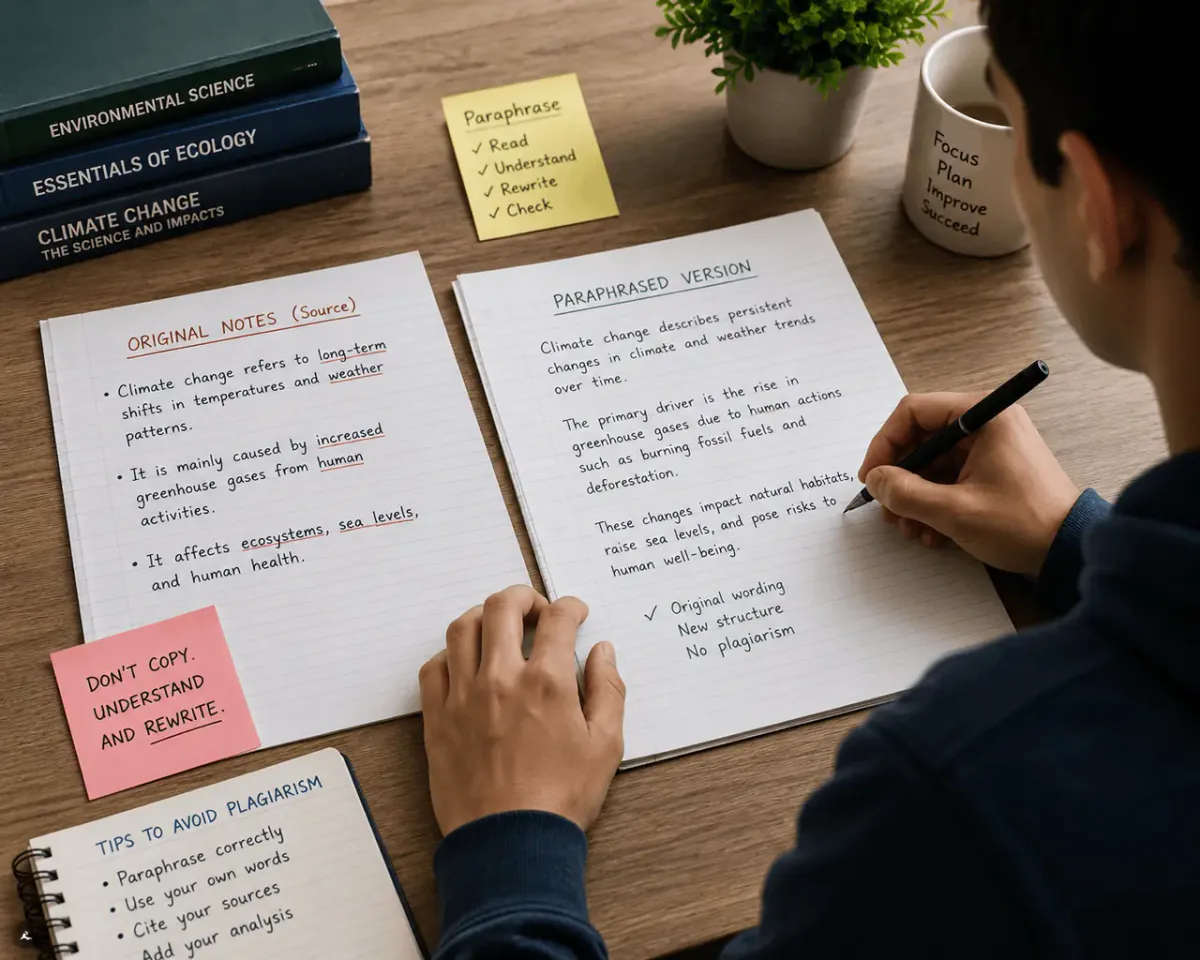
Paraphrasing means restating someone else's ideas in your own words and sentence structure, while preserving the original meaning. It's different from quoting (copying exact words) and different from summarizing (condensing the main point into a shorter form).
- The idea matters more than the exact wording
- You want to integrate a source smoothly into your writing
- Direct quotes would interrupt your essay's flow
- You need to demonstrate comprehension, not just recall
The key phrase is your own words and sentence structure. Changing a few words while keeping the same sentence shape is not paraphrasing — it's the most common form of accidental plagiarism.
The Line Between Paraphrasing and Plagiarism
Here's where most students go wrong. Plagiarism isn't just copying text verbatim. It also includes:
- Mosaic plagiarism: swapping out individual words with synonyms while keeping the original structure intact
- Insufficient paraphrasing: rewriting only parts of a sentence while leaving other sections unchanged
- Uncited paraphrasing: restating ideas in your own words but failing to credit the original author
The test is simple: if your version mirrors the original's sentence structure, order of ideas, or specific phrasing — even with different words — it's still plagiarism.
Original: "The rise of social media has fundamentally altered how young people form their identities, often leading them to curate online personas that diverge significantly from their real-world selves."
Plagiarism (mosaic): "The growth of social media has deeply changed how teenagers build their identities, frequently causing them to create online personas that differ greatly from who they really are."
Proper paraphrase: "Young people today increasingly construct their sense of self through social media, which often creates a gap between the version of themselves they project online and who they are offline (Author, Year).
Notice the proper paraphrase changes sentence structure, reorders the ideas, uses different phrasing throughout, and still includes a citation.
Step 1: Read the Source Material Thoroughly
Before you write a single word, read the passage — ideally multiple times. You cannot paraphrase what you haven't fully understood. If you're paraphrasing an entire essay, identify its thesis, main arguments, supporting evidence, and conclusion.
Don't skim. Shallow reading leads to surface-level paraphrasing that stays too close to the original.
Step 2: Set the Original Aside
This is the single most effective technique for avoiding accidental plagiarism: put the original text face-down (or close the tab) before you write your paraphrase.
When the original is in front of you, your brain naturally mirrors its structure. When you write from memory, you're forced to reconstruct the ideas in your own natural voice.
Step 3: Write Your Version from Memory
Write out what you remember without looking at the source. Focus on capturing the meaning, not the wording. If you forget an exact detail, leave a placeholder and fill it in later after you've drafted your version.
Step 4: Compare and Adjust
Now go back and compare your version to the original. Ask:
- Do I share any phrases of three or more words in a row? (If yes, rewrite.)
- Does my sentence follow the same structural pattern? (If yes, restructure.)
- Have I preserved the original meaning accurately? (If no, revise.)
- Is this still attributed to the original author? (If no, add a citation.)
Step 5: Cite the Source
Even a perfectly paraphrased passage requires a citation. The idea still belongs to someone else. Use whatever citation format your context requires — APA, MLA, Chicago — and apply it consistently.
Advanced Paraphrasing Techniques
Change the Sentence Structure
The most powerful way to distance your paraphrase from the original is structural transformation:
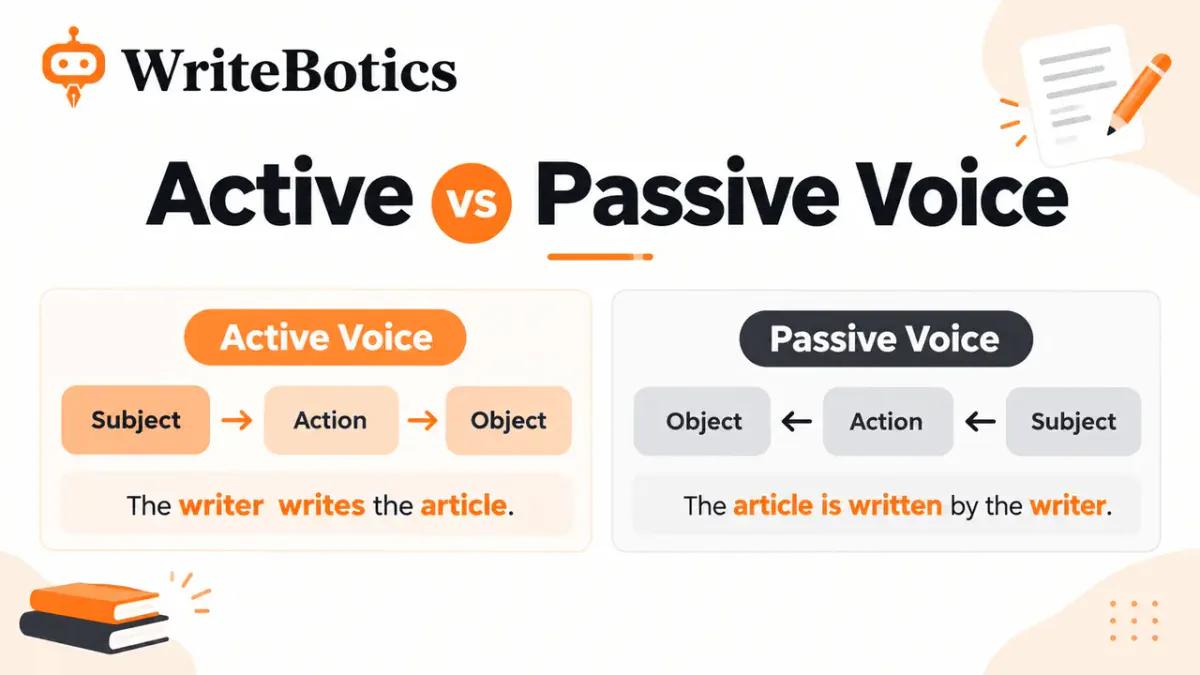
- Turn an active sentence into a passive one (or vice versa)
- Break one long sentence into two shorter ones
- Combine two short sentences into one complex sentence
- Start the sentence with a different element (time, consequence, subject)
Use Synonyms Thoughtfully — But Sparingly
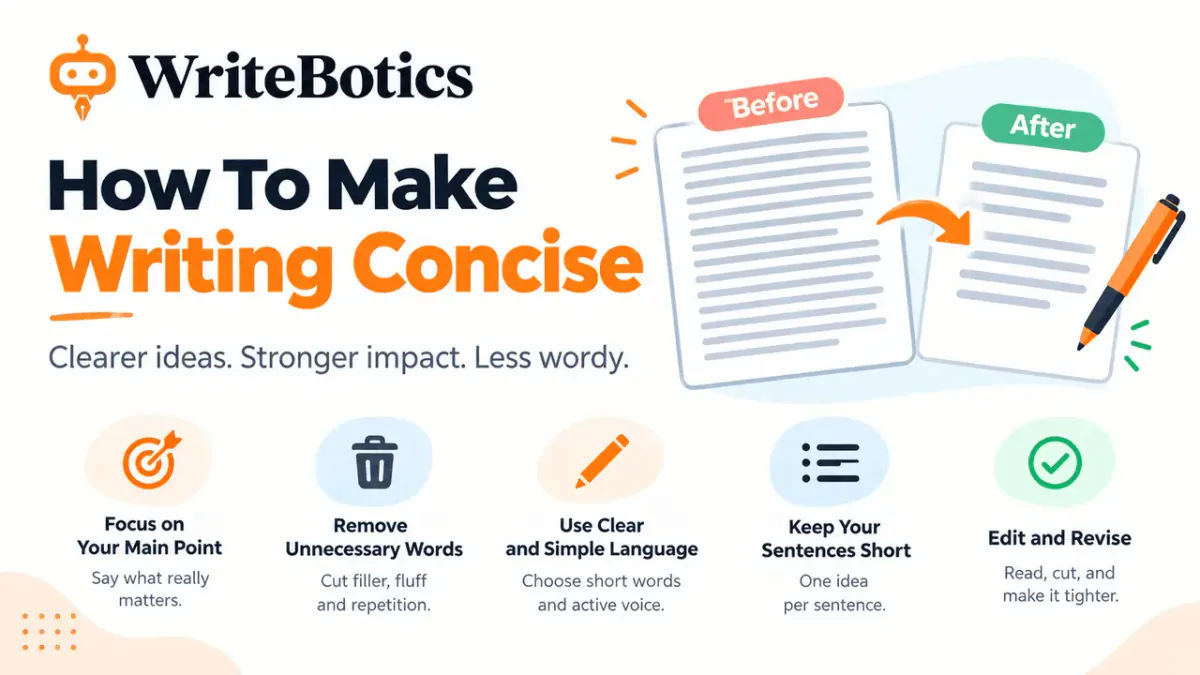
Synonyms are a tool, not a strategy. Replacing every word with a synonym produces awkward robotic writing. Instead, focus on rephrasing entire clauses rather than swapping individual words.
Some words should stay exactly as they are: technical terms, proper nouns, and discipline-specific vocabulary don't have useful synonyms and shouldn't be changed.
Change the Point of View or Focus
Original essays often emphasize one angle. Your paraphrase can legitimately shift the lens — for example, from cause to effect, or from the individual to the systemic level — while still representing the original idea faithfully.
Use Attribution Phrases
Weave in attribution language that signals you're conveying someone else's argument:
- "According to [Author]..."
- "[Author] argues that..."
- "As [Author] points out..."
- "In [Author]'s view..."
These phrases do double duty: they attribute the idea clearly and signal to readers (and plagiarism checkers) that you're consciously engaging with a source.
Using a Paraphrasing Tool for Essays: Pros, Cons, and Best Practices
AI-powered paraphrasing tools have become widely used in academic and professional writing. They can be genuinely helpful — if you use them correctly.
What Paraphrasing Tools Do Well
- Generate alternative phrasings quickly when you're stuck
- Help break writer's block on difficult passages
- Offer vocabulary variety you might not have considered
- Speed up the drafting process for large volumes of text
What They Get Wrong
Paraphrasing tools are not plagiarism-proof by default. Most tools:
- Stay closer to the original structure than good manual paraphrasing would
- Produce synonyms that are technically correct but contextually awkward
- Cannot verify whether they've preserved the original meaning accurately
- Don't add citations (which are still required regardless)
A paraphrasing tool for essays is a starting point, not a finishing point. Always review tool output against the original to check for accuracy, over-similarity, and awkward phrasing. Edit the output in your own voice before submitting.
How to Use a Paraphrasing Tool Responsibly
Paste the original passage into the tool
Review the output critically — don't accept it wholesale
Compare the tool's version to the original for structural similarity
Revise the output in your own voice
Run the final version through a Plagiarism Checker ]( https://www.duplichecker.com)
Add your citation
Think of it as a co-writer that drafts a rough version for you to refine, not a machine that produces finished academic writing.
How to Avoid Plagiarism When Paraphrasing: A Checklist
Before you submit any paraphrased content, run through this checklist:
Content accuracy
- Does my paraphrase preserve the original meaning?
- Have I avoided distorting or exaggerating the source's claims?
Originality
- Is my sentence structure different from the original?
- Are there no shared phrases of three or more words?
- Have I rewritten — not just word-swapped — the passage?
Attribution
- Is the source cited within the text?
- Is the full reference included in my bibliography or works cited?
- Have I used attribution phrases to signal it's someone else's idea?
Final check
- Have I run the passage through a plagiarism checker?
- Would my version make sense to a reader who hasn't seen the original?
Common Paraphrasing Mistakes to Avoid
Mistake 1: Paraphrasing without reading closely If you don't understand the source, you can't restate it accurately. You'll end up misrepresenting the original or staying too close to the surface wording.
Mistake 2: Starting with the original in front of you Writing while staring at the source is the fastest path to mosaic plagiarism. Draft first, then compare.
Mistake 3: Relying on a thesaurus alone A thesaurus changes words; it doesn't change structure. True paraphrasing requires restructuring the sentence, not just replacing its vocabulary.
Mistake 4: Forgetting to cite Uncited paraphrasing is still plagiarism. Every paraphrased idea needs attribution, no matter how thoroughly you've rewritten it.
Mistake 5: Paraphrasing when you should be quoting Some passages — legal definitions, iconic statements, technical specifications — should be quoted exactly. Don't force a paraphrase when the original wording is what matters.
When to Paraphrase vs. Quote vs. Summarize
| Situation | Best Approach |
|---|---|
| The idea matters more than the exact words | Paraphrase |
| The exact wording is significant (legal, historical, literary) | Direct quote |
| You need to convey the overall argument of a long source | Summarize |
| You want to show deep engagement with a specific passage | Paraphrase + brief quote |
| The source is highly technical and precise | Quote, then explain |
Final Thoughts
Paraphrasing is a skill, not a shortcut. The goal isn't to trick a plagiarism detector — it's to demonstrate that you've genuinely engaged with source material and can integrate it into your own thinking.
The process takes practice: read carefully, write from memory, restructure deliberately, check rigorously, and always cite. If you use a paraphrasing tool for essays, treat its output as a rough draft that still needs your judgment and voice.
Get this right, and paraphrasing becomes one of the most powerful tools in your writing toolkit — a way to build arguments that are grounded in evidence but expressed in your own authentic voice.
Frequently Asked Questions (FAQs)
Q1: Is paraphrasing considered plagiarism?
Paraphrasing is not plagiarism — as long as you rewrite the idea in your own words and sentence structure, and include a proper citation. However, paraphrasing becomes plagiarism when you change only a few words while keeping the original structure (mosaic plagiarism), or when you forget to credit the source entirely. The rewrite must be genuine, not cosmetic.
Q2: How much do I need to change a sentence for it to count as a paraphrase?
A good rule of thumb: your version should share no consecutive phrase of three or more words with the original, and the sentence structure should be noticeably different. That usually means more than just swapping synonyms — you'll need to restructure the sentence, reorder ideas, or change the grammatical form entirely (e.g., active to passive, or one long sentence split into two).
Q3: Do I still need to cite a source if I paraphrase it?
Yes, always. A citation is required whether you quote, paraphrase, or summarize. The original idea belongs to its author regardless of how thoroughly you've rewritten the wording. Failing to cite a paraphrased passage is called uncited paraphrasing, and it's treated as plagiarism by most academic institutions.
Q4: Can I use a paraphrasing tool for essays without getting caught for plagiarism?
Paraphrasing tools can help generate alternative phrasings, but they are not automatically plagiarism-safe. Many tools produce output that's structurally too similar to the original to pass scrutiny. You should always review the tool's output, revise it in your own voice, compare it against the source for over-similarity, and run it through a plagiarism checker before submitting. The tool is a drafting aid, not a plagiarism solution.
Q5: What is the difference between paraphrasing and summarizing?
Paraphrasing restates a specific passage — often sentence by sentence in your own words, maintaining a similar level of detail. Summarizing condenses the overall argument or main point of a longer source into a much shorter form, leaving out supporting details. Use paraphrasing when a specific idea or argument matters; use summarizing when you need to convey what a whole text is about.
Q6: How do I paraphrase without losing the original meaning?
The safest approach is to read the passage carefully until you fully understand it, then set it aside and write from memory. This forces you to reconstruct the idea in your own natural language. Afterwards, compare your version to the original to confirm the meaning is preserved — not distorted, exaggerated, or oversimplified. If any nuance is lost, revise until your version is both original in expression and accurate in meaning.
Q7: What are the best paraphrasing tools for essays?
Several AI-powered tools are commonly used, including QuillBot, Grammarly's paraphrase feature, Wordtune, and Scribbr's paraphrasing tool. Each has different strengths — some offer multiple tone modes, others integrate directly with writing platforms. That said, no tool should be used without human review. Always treat tool output as a first draft and revise it before use.
Q8: Can I paraphrase the same source multiple times in one essay?
Yes, you can draw on the same source multiple times — but each instance needs its own in-text citation. Be careful not to over-rely on a single source, as this can weaken your argument and raise concerns about the originality of your analysis. A strong essay weaves together multiple sources with your own critical thinking between them.
Q9: Is it better to quote or paraphrase in academic writing?
In most academic writing, paraphrasing is preferred over quoting because it demonstrates that you've processed and understood the material — not just copied it. Direct quotes are best reserved for situations where the exact wording is important: legal text, a famous or defining statement, or a highly technical definition that shouldn't be altered. As a general guideline, use direct quotes sparingly and paraphrase the rest.
Q10: How can I check if my paraphrase is too similar to the original?
Read both versions side by side and look for shared phrases of three or more consecutive words. You can also paste your paraphrase into a free plagiarism checker like Grammarly, Quetext, or PlagScan to scan for similarity. If similarity is flagged, restructure the sentence rather than just swapping more synonyms — the problem is usually structural, not just vocabulary.