Reading a ten-page report and turning it into a few clear sentences feels harder than it should be. That's usually because people try to summarize while they're still reading, instead of waiting until they understand the whole piece. If you've ever wondered how to summarize a long article without losing the point the author was making, the answer comes down to a handful of habits rather than any single trick. In this guide, we'll walk through a method that works for research papers, news stories, and long blog posts alike.
Why Summarizing Is Harder Than It Looks
Most people assume summarizing just means making something shorter. That's only half true. A good summary keeps the structure of the original argument while cutting out examples, repetition, and side details. Skip that part, and you end up with a summary that's short but doesn't actually reflect what the article said.
There are a few reasons this trips people up:
- It's tempting to copy sentences instead of rephrasing them.
- Long articles often bury the main point in the middle, not the start.
- Writers naturally want to include everything they found interesting, even if it's not essential.
Once you notice these patterns, summarizing gets a lot easier to manage.
How to Summarize a Long Article Step by Step
Instead of summarizing line by line, try working through the piece in stages. Here's an approach that holds up well for most types of writing:
- Read the article once, all the way through, without taking notes.
- Go back and underline or highlight the sentence in each section that carries the main idea.
- Write one short sentence per section, in your own words, based on what you highlighted.
- Combine those sentences into a short paragraph.
- Read your summary against the original to check that nothing important got left out.
This method works because it forces you to understand the whole article before you start cutting it down. Jumping straight into shortening sentences usually leads to a summary that misses the bigger picture.
Common Mistakes to Avoid
- Copying phrases directly – even short borrowed phrases can make a summary feel like a patchwork instead of your own writing.
- Including too many examples – examples support the main point, but they rarely belong in a summary.
- Summarizing the introduction only – the strongest point of an article is often buried later, not in the opening paragraph.
- Writing a summary that's too long – if your summary is nearly as long as the article, it's not really doing its job.
If your draft has any of these issues, it helps to step away for a few minutes and reread the original before trying again.
How to Summarize Text Online Without Losing Accuracy
Plenty of articles today live entirely online, which changes the process a little. When you summarize text online, formatting can get in the way. Headlines, pull quotes, and sidebars sometimes look like main points even when they're not. Before you start, it helps to scroll through the whole piece once just to get a sense of its shape, rather than starting at the top and writing as you go.
- Bullet points within the article, since they often hide the real argument.
- Quotes from other people, which usually support a point rather than being the point itself.
- Conclusion paragraphs, which often restate the main idea more clearly than the introduction does.
Reading the conclusion early, even before you finish the rest of the piece, can give you a useful anchor for what to look for elsewhere.
When an Article Summarizer Free Tool Comes In Handy
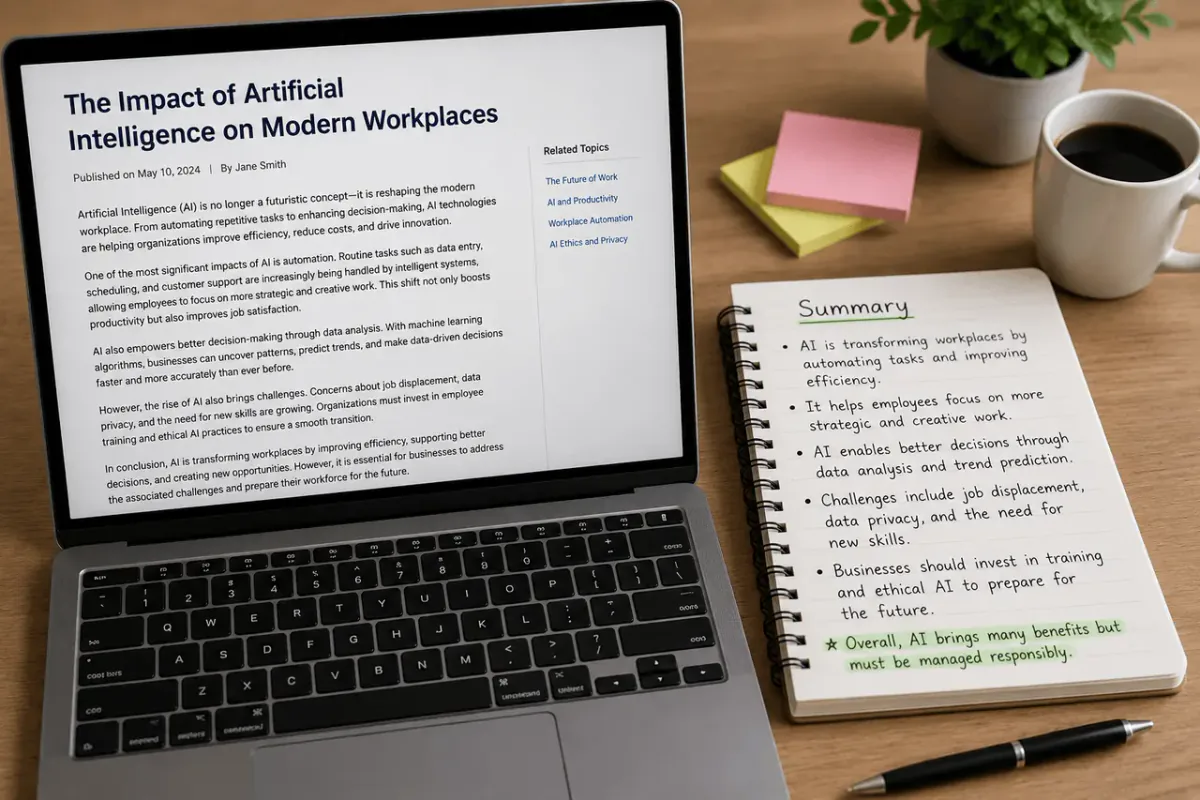
There are moments when you're short on time and just need a starting point. An article Summarizer Free Tool can pull out the obvious main points quickly, especially with longer technical pieces where the structure is predictable. That said, it's worth treating the output as a rough draft rather than a final version. Read through it, check it against the source, and rewrite anything that sounds stiff or that misses a detail you think matters.
If your school or workplace has a writing center, it's also worth checking our guide on academic writing resources for a few more options on combining manual summarizing with outside feedback.
A Quick Example
Original passage: "Remote work has changed how companies think about office space, with many businesses choosing to reduce their physical footprint while investing more heavily in digital collaboration tools."
Weak summary: "Remote work changed how companies think about office space and digital tools."
Better summary: "Many companies have shrunk their office space and put more money into digital collaboration as remote work becomes standard."
Notice how the second version keeps the cause-and-effect relationship from the original, instead of just trimming words.
Final Thoughts
Summarizing isn't about making something shorter for the sake of it. It's about understanding an article well enough to explain its main point in a few honest sentences. Once you get used to reading fully before writing, the whole process moves faster, and the summaries you produce end up far more accurate. For more on reading comprehension and study techniques, the Purdue OWL writing lab has solid material worth a look.
With a bit of practice, summarizing stops feeling like a chore and starts feeling like a normal part of reading anything long.
FAQs
1. What's the difference between summarizing and paraphrasing?
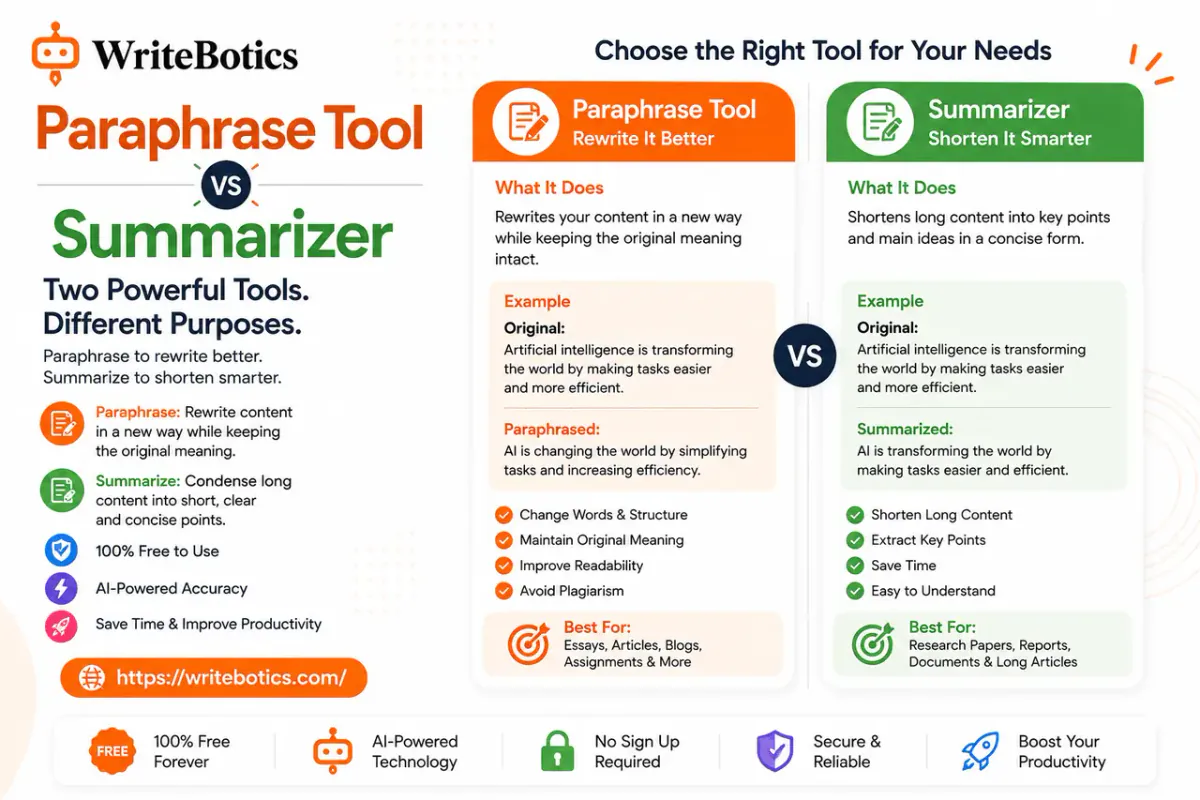
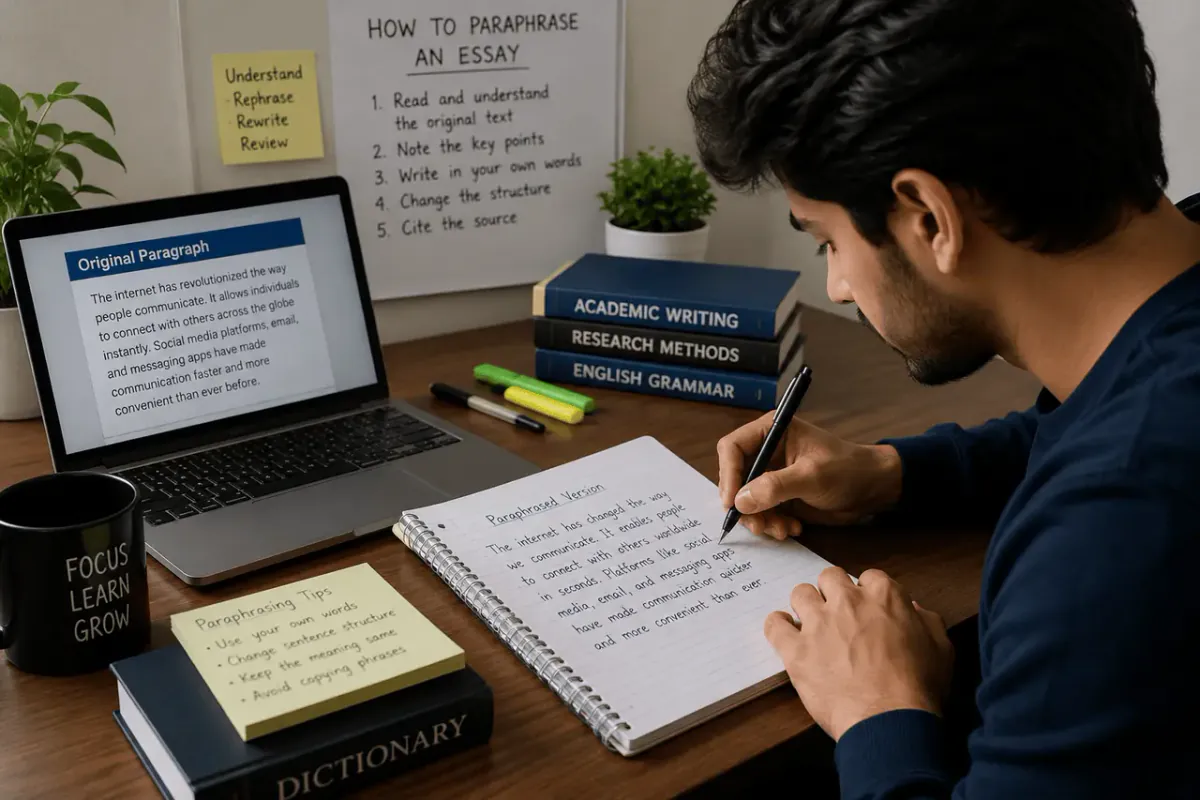
Summarizing shortens a piece down to its main points, while paraphrasing rewrites a passage in your own words at roughly the same length.
2. How short should a summary be?
There's no fixed rule, but a summary is usually around ten to twenty percent of the original length, depending on how dense the article is.
3. Should I include my own opinion in a summary?
No. A summary should reflect the author's points only, without adding personal commentary or analysis.
4. Can I quote the original article in a summary?
It's better to avoid direct quotes unless a specific line is essential. Most summaries work best when written entirely in your own words.
5. Is it okay to use an article summarizer free tool for schoolwork?
It can help you get started, but the final version should always be reviewed and rewritten by you so it accurately reflects the source material.