Paraphrasing sounds simple: read a paragraph, then say it in your own words. In practice, it's one of the easiest places to accidentally slip into plagiarism — even when you never meant to copy anything. Swapping out a few words while keeping the original sentence structure, leaning too heavily on a thesaurus, or forgetting to credit the source can all turn a "paraphrase" into something closer to a copy.
If you've ever wondered how to paraphrase without plagiarizing, the good news is that it's a learnable skill, not a matter of luck. This guide walks through what paraphrasing actually requires, the mistakes that most often cause trouble, and a step-by-step process you can use on any paragraph — academic, professional, or web content.
What Paraphrasing Actually Means
Paraphrasing is restating someone else's idea in your own words and, typically, your own sentence structure, while keeping the original meaning intact. It's different from:
- Quoting, where you repeat the exact words and mark them clearly with quotation marks and a citation.
- Summarizing, where you condense a longer passage down to its main point, often losing detail along the way.
- Copying with minor edits, where a few synonyms are swapped in but the sentence pattern and word order stay largely the same — this is often called "patchwriting," and it's still considered plagiarism by most academic and publishing standards.
A true paraphrase changes both the words and the structure. That's the part people skip, and it's the part that gets flagged.
Why Paraphrasing Goes Wrong
Most accidental plagiarism doesn't come from bad intentions. It comes from a few predictable habits:
Word-swapping instead of rewriting. Replacing "important" with "significant" and "shows" with "demonstrates" doesn't change the sentence — it just changes the vocabulary sitting inside the same skeleton. If someone laid your paraphrase next to the original, the shape would look identical.
Keeping the original sentence order. Even with different words, following the exact same sequence of clauses and ideas mirrors the source too closely.
Skipping the citation. Paraphrased material still needs attribution. Rewording someone's argument doesn't make the underlying idea yours — you're still borrowing their thinking, so you still need to credit them.
Paraphrasing while looking at the source. It's hard not to mirror phrasing when the original text is right in front of you. Writers who read a passage, look away, and then write from memory tend to produce much more independent phrasing.
Relying only on a thesaurus tool. Synonym swaps can also introduce awkward or inaccurate word choices, since many "synonyms" aren't perfect matches in context.
A Step-by-Step Method for Paraphrasing a Paragraph
Here's a reliable process that avoids these traps.
1. Read the paragraph fully before touching it
Read the whole paragraph at least twice. Don't start rewriting mid-read — you need to understand the full idea, not just the first sentence, before you can restate it accurately.
2. Identify the core idea, not just the wording
Ask: what is this paragraph actually claiming or explaining? Try to state it in a single sentence, out loud or in a note, without looking at the text. This forces you to process the meaning rather than the phrasing.
3. Close the source and write from memory
This is the single most effective habit for avoiding accidental copying. Cover the original paragraph, or move it off-screen, and write your version based on what you understood — not what you can still see.
4. Change the structure, not just the words
Once you have a draft, check it against the original for structural overlap:
- If the original leads with a cause and ends with an effect, try reversing that order.
- If the original uses one long sentence, consider splitting it into two — or combining two short sentences into one.
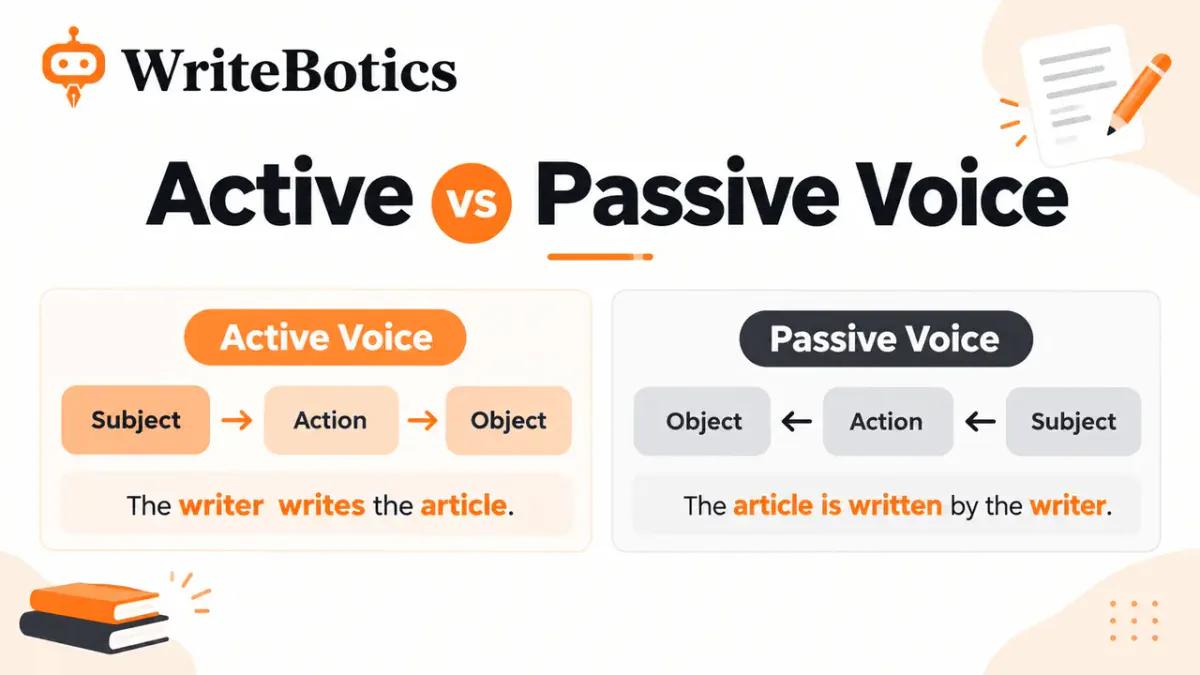
- If the original is written in passive voice, switch to active voice, or vice versa.
Structural variation is what separates real paraphrasing from disguised copying.
5. Compare both versions side by side
Put your paraphrase next to the original and check for:
- Matching sentence order
- Identical or near-identical phrases longer than a few words
- The same examples presented in the same sequence
If any of these overlap too closely, revise that section again.
6. Add the citation
If the idea came from a specific source, cite it according to whatever style your context requires (APA, MLA, Chicago, or a simple attribution line for a blog or article). Paraphrasing removes the need for quotation marks, not the need for credit.
7. Run a plagiarism check as a final safeguard
Even careful writers benefit from a second check before publishing or submitting. A Plagiarism Checker can catch matching phrases you might not notice after staring at your own draft for too long, giving you a chance to revise before it becomes a problem.
A Quick Before-and-After Example
Original: "Regular exercise improves cardiovascular health by strengthening the heart muscle, which allows it to pump blood more efficiently throughout the body."
Weak paraphrase (too close to the original): "Consistent physical activity boosts heart health by making the heart muscle stronger, which lets it pump blood more effectively around the body."
Notice that this version just swaps a handful of words — "regular" to "consistent," "improves" to "boosts" — while keeping the exact sentence structure and order. This is patchwriting, not paraphrasing.
Stronger paraphrase: "When someone exercises consistently, their heart becomes more efficient at circulating blood, largely because the heart muscle itself grows stronger over time."
This version restructures the sentence, changes the logical flow, and uses different phrasing throughout, while still conveying the same core idea.
Using a Paraphrasing Tool the Right Way
Paraphrasing tools can genuinely help, especially when you're stuck rephrasing an awkward sentence or want a faster starting point. The key is treating the output as a draft, not a finished product.
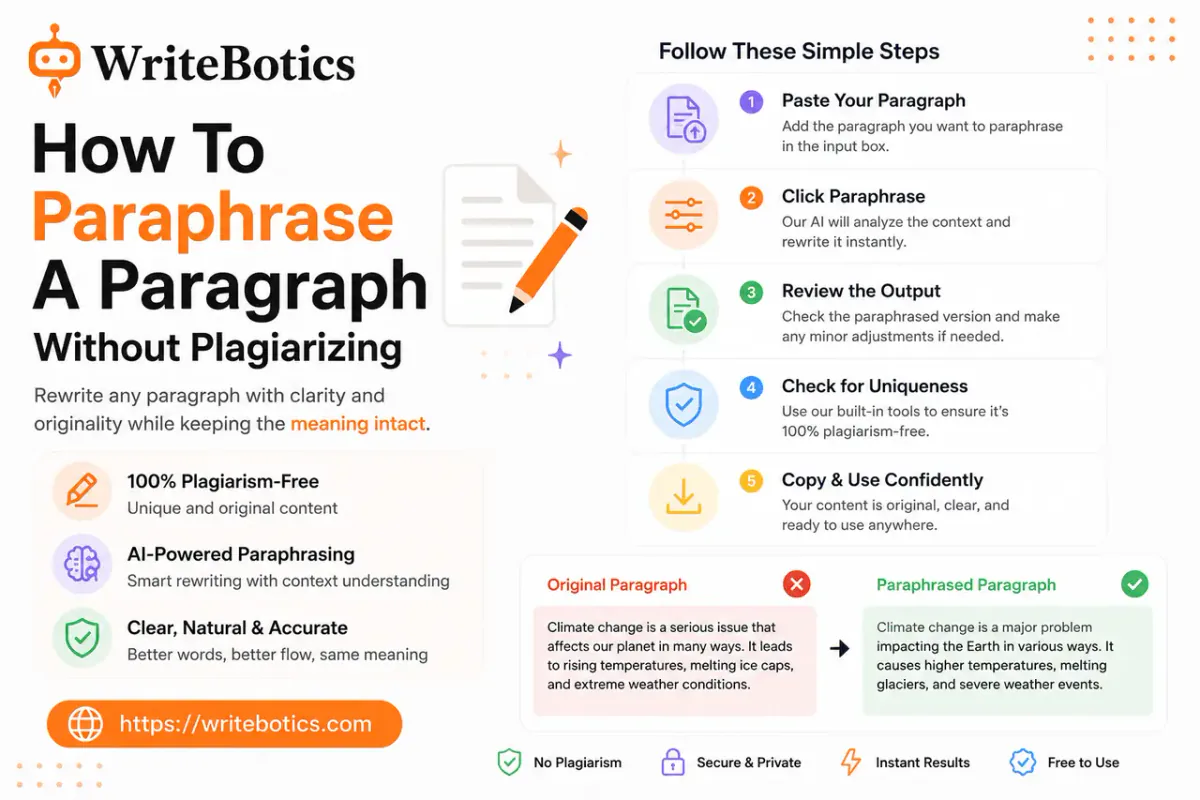
WriteBotics' Paraphrase Tool can reword a paragraph while keeping the original meaning intact, which is useful for generating alternative phrasing to build from. But no tool can fully judge context, tone, or whether a citation is needed — that review still belongs to you. A dependable workflow looks like this:
- Paste your paragraph into the paraphrasing tool.
- Read the suggested rewrite critically — does it still say exactly what you meant?
- Adjust anything that feels inaccurate, robotic, or oddly worded.
- Add citations where the underlying idea still belongs to someone else.
- Run the final version through a plagiarism check before publishing.
Used this way, a paraphrasing tool speeds up the process without replacing the judgment that keeps your writing original and honest.
Common Mistakes to Avoid
- Paraphrasing only the first and last sentence of a paragraph while leaving the middle largely intact.
- Assuming a paraphrase never needs a citation. It does, whenever the idea itself isn't yours.
- Trusting an AI detector or plagiarism score as the final word. These tools give useful signals, but they don't replace a careful read-through.
- Overcomplicating the language. A paraphrase that swaps in obscure vocabulary just to sound different can end up less clear than the original — clarity matters more than novelty.
- Paraphrasing under time pressure. Rushed paraphrasing is where most patchwriting happens, since there's no time to restructure sentences properly.
Bringing It Together
Paraphrasing without plagiarizing comes down to a simple discipline: understand the idea, step away from the source, rebuild the sentence in your own structure, and give credit where it's due. Tools can support each stage of that process — from rewording drafts to catching accidental overlap before you publish — but the judgment behind a good paraphrase is still yours to apply.
If you want to explore more of the writing workflow around this, WriteBotics' homepage lists the full set of free writing tools, including grammar and originality checks that pair naturally with paraphrasing work. You might also find these guides useful:
- AI Writing Assistant: Write Faster and Smarter Today
- Best Writing Tools Online to Boost Your Creativity
FAQs
Is paraphrasing considered plagiarism?
Paraphrasing itself isn't plagiarism — it becomes plagiarism when the wording or structure too closely mirrors the original, or when the source isn't credited for an idea that isn't yours.
Do I need to cite a paraphrased paragraph?
Yes, if the idea or information came from someone else's work. Paraphrasing removes the need for quotation marks, but it doesn't remove the need for attribution.
What's the difference between paraphrasing and summarizing?
Paraphrasing restates a passage in your own words at roughly the same length and level of detail. Summarizing condenses a longer passage down to its key points, leaving out most of the supporting detail.
Can I use an AI paraphrasing tool for academic work?
It depends on your institution's policies on AI-assisted writing. Many allow it for drafting support, but expect you to review, revise, and cite appropriately. Check your specific guidelines before submitting AI-assisted work.
How can I tell if my paraphrase is too close to the original?
Compare both versions side by side. If the sentence order, structure, or several consecutive words match closely, revise further. Reading your paraphrase aloud without the original in view also helps you catch phrasing that's borrowed rather than rebuilt.
Are plagiarism checkers 100% accurate?
No. They're a useful signal for catching matching phrases and passages, but they can miss context-specific issues or flag common phrasing as a false match. Use them as one part of your review process, not the only check.