Accidental plagiarism happens when you use someone else's words, ideas, structure, or previously submitted work without giving the required credit—even when you never intended to copy. Common examples include forgetting a citation, paraphrasing too closely, leaving out quotation marks, copying from research notes, and reusing your own previous assignment without checking the rules.
The good news is that most accidental plagiarism can be prevented by using a careful research process. When you spot a problem, the solution is usually straightforward: identify the source, determine what was borrowed, add the appropriate attribution, rewrite overly close passages, or follow the rules for reused work.
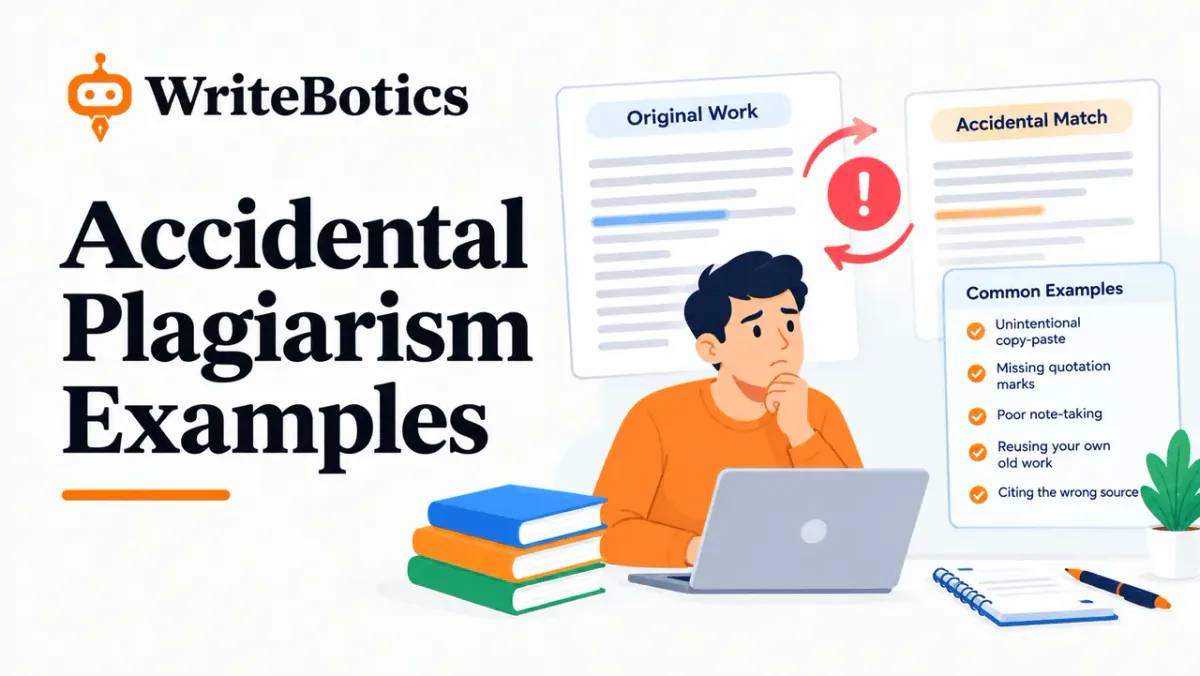
Here are 10 common accidental plagiarism examples, with practical ways to fix each one.
What Is Accidental Plagiarism?
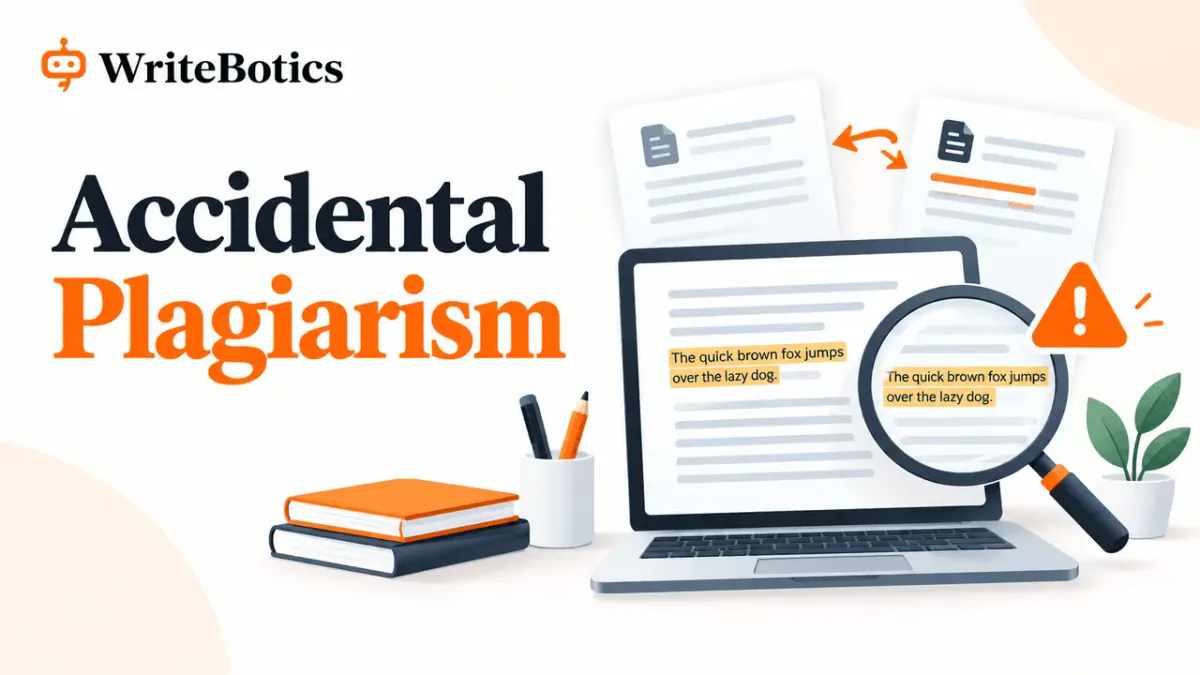
Accidental plagiarism is the improper use of another person's words, ideas, or other original material without appropriate attribution, where the writer did not deliberately set out to present the material as their own.
It can happen for surprisingly ordinary reasons. You may take notes while researching and later forget which sentences came from a source. You might rewrite a paragraph by changing several words while unknowingly keeping the original sentence structure. Or you may copy a quotation into your draft and forget to add quotation marks before submitting it.
The exact rules vary by school, university, publisher, workplace, and citation style. Something that is acceptable in one context may require disclosure or attribution in another.
Accidental does not necessarily mean harmless. If a passage needs attribution, the fact that you forgot to provide it can still create an originality or academic-integrity problem.
10 Accidental Plagiarism Examples
The following examples use original scenarios to show how accidental plagiarism can happen and what to do about it.
| Example | What went wrong | Typical fix |
|---|---|---|
| Missing citation | A source's idea was used without attribution | Add the appropriate citation |
| Close paraphrase | Wording and structure remain too close to the source | Rewrite from understanding and cite |
| Forgotten quotation marks | Exact words appear without quotation formatting | Add quotation marks and attribution |
| Copied research notes | Source wording was accidentally retained in notes and draft | Compare with the source and rewrite or quote |
| Patchwork writing | Phrases from multiple sources were stitched together | Rebuild the passage in your own structure |
| Source attribution lost | Citation was separated from the borrowed passage | Restore the citation or revise the passage |
| Uncredited distinctive language | A memorable phrase was reused without attribution | Quote or appropriately attribute it |
| Translation without attribution | A source was translated but presented as original wording | Cite the original source |
| Reused academic work | Previous work was submitted again without checking the rules | Disclose, cite, or replace it as required |
| Shared template or sample wording | Someone else's wording was copied from a model or example | Rewrite it and credit the source where necessary |
1. You Forget to Cite an Idea
Suppose you read a report arguing that short, regular study sessions can help learners distribute their practice over time. You understand the point and later write it in completely different words.
Your sentence may be original in wording, but the underlying idea still came from the source.
Accidental problem: You cite direct quotations in your paper but forget to cite this paraphrased idea.
How to fix it: Add the citation required by your citation style and context. A citation is not only for copied words. Source-derived ideas and information may also require attribution.
A useful habit is to add a temporary source marker while drafting, even if you have not formatted the final citation yet.
2. Your Paraphrase Is Too Close to the Original
This is one of the most common forms of accidental plagiarism.
Imagine a source says:
Regular feedback helps new writers identify recurring problems and improve their drafts over time.
A too-close paraphrase might be:
Frequent feedback helps beginning writers identify repeated problems and improve their drafts over time.
Several words have changed, but the sentence still follows the original closely.
How to fix it: First make sure you understand the source. Then set it aside and explain the idea using your own structure and wording. Compare your version with the original afterward to check accuracy.
Even a strong paraphrase still needs attribution when the underlying idea comes from the source.
For more guidance, see How to Paraphrase an Essay Correctly and Avoid Plagiarism.
3. You Forget Quotation Marks Around Exact Words
You copy an especially useful sentence from a book or article into your draft. You add the author's citation but forget that the wording is copied exactly.
The citation identifies the source, but the formatting does not tell the reader that the words themselves came directly from that source.
Accidental problem: Direct wording is presented as though you wrote it.
How to fix it: If you want to retain the exact wording, use the quotation format required by your citation style and provide the appropriate attribution and location information when required.
If the exact wording is not important, another option is to write a genuine paraphrase in your own structure and cite the source.
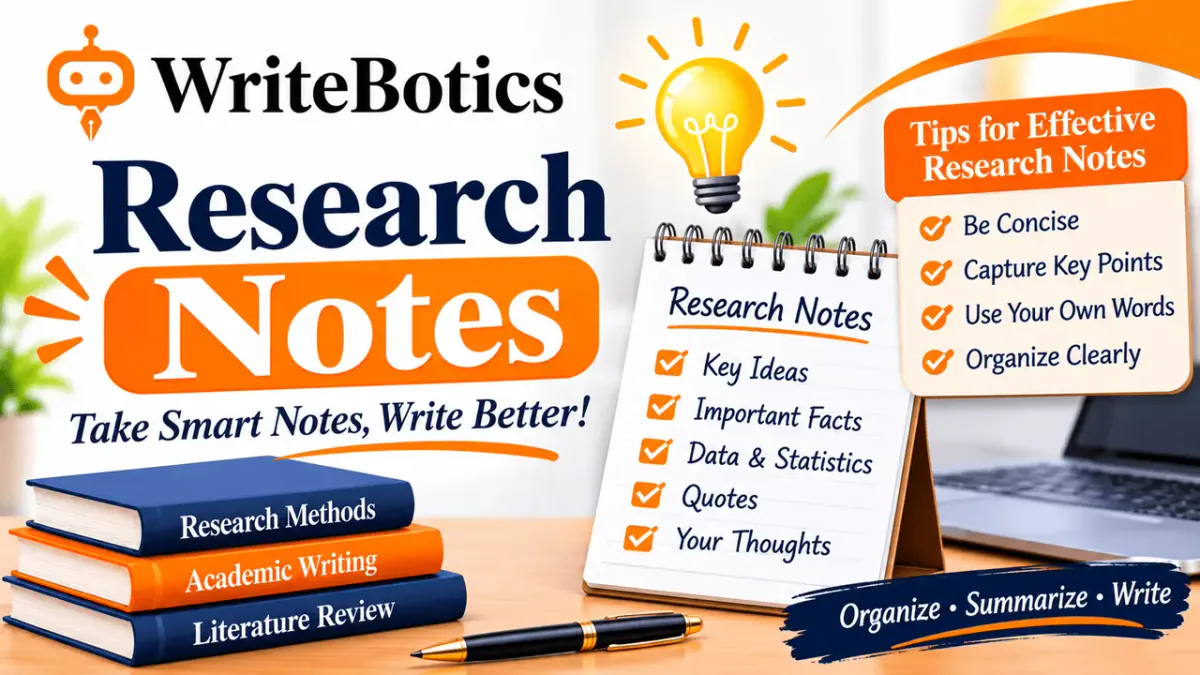
4. You Copy Source Text Into Your Research Notes and Later Reuse It
Research notes can create an easy-to-miss problem. You copy several useful sentences into a document while researching, intending to rewrite them later.
Weeks later, you return to the notes and incorporate one of those sentences into your article without realizing that it came directly from the source.
Why it happens: Your notes and original writing look identical because they are stored together.
How to fix it: Clearly distinguish quotations from your own notes. For example, label copied material as DIRECT QUOTE and record the source immediately.
When drafting, treat anything marked as a quotation as source material that must either remain a properly formatted quotation or be independently paraphrased.
5. You Create a Patchwork Paragraph From Multiple Sources
Patchwork plagiarism can happen when you research a topic heavily and start assembling sentences from several sources.
You may change some words, move phrases around, and combine material from different articles. The finished paragraph looks different from any one source, but much of its language or structure still comes from other writers.
How to fix it: Stop editing the existing patchwork sentence by sentence. Instead, identify the main ideas you need, close the sources, and write the paragraph from your own understanding.
Then return to the sources to verify facts and add appropriate citations.
This approach also produces clearer writing because your paragraph is organized around your argument rather than around the wording of multiple sources.
6. The Citation Gets Separated From the Borrowed Material
Imagine a paragraph contains three sentences based on the same source. You put a citation at the end of the first sentence, then add two more source-derived sentences during editing.
Now the citation may no longer clearly communicate which material came from the source.
How to fix it: Make attribution clear enough for a reader to understand where the sourced material begins and ends. Depending on the citation style and paragraph structure, that may mean repeating citations or using a signal phrase that clearly identifies the source.
During editing, check citations again rather than assuming they remain correct after paragraphs have been rearranged.
7. You Reuse a Distinctive Phrase Without Realizing It Is Borrowed
Sometimes a phrase sticks in your memory because it is particularly memorable. You later use it in your own writing without remembering where you encountered it.
Common language usually does not create the same concern as distinctive, creative wording. But a memorable phrase that is strongly associated with a particular author's expression deserves closer attention.
How to fix it: If you recognize that the wording is distinctive and source-derived, either quote and attribute it appropriately or rewrite the idea in genuinely independent language and cite the underlying source when required.
The goal is not to replace every familiar phrase with awkward synonyms. It is to avoid presenting another writer's distinctive expression as your own.
8. You Translate a Source Without Crediting It
Plagiarism does not automatically disappear because the original text was translated into another language.
For example, you read a Spanish-language article, translate a paragraph into English, and include the translated content in an essay without identifying the original source.
The language is different, but the underlying material still came from someone else.
How to fix it: Attribute the original source according to the requirements of your citation style and context. Make clear when the wording is your translation if that distinction matters.
If the translated passage is based closely on the source, do not treat translation as a substitute for attribution.
9. You Reuse Your Own Previous Work
Accidental plagiarism can involve your own writing too.
Suppose you submitted a research paper for one course. Later, you reuse several paragraphs in another assignment without checking whether your instructor permits previously submitted material.
This is commonly discussed as self-plagiarism or text recycling, depending on the context.
The issue is different from copying someone else's work, but the same basic principle applies: do not assume that previously submitted work automatically qualifies as new work.
How to fix it: Check the rules for the assignment, course, publisher, or organization. You may need permission, disclosure, attribution to your earlier work, or completely new writing.
For a deeper explanation, read What Is Self-Plagiarism? Examples, Risks and How to Avoid It.
10. You Copy Wording From a Sample, Template, or Model
Students and professionals often work from examples. A template can be useful for understanding structure, but copying its distinctive wording into your own submission can create an originality problem.
For example, you find a model report online and reuse several sentences because they describe your situation perfectly.
How to fix it: Use examples to understand organization and expectations, then write the actual content yourself. If the material contains information, language, or ideas that need attribution, credit the source according to the relevant rules.
A template is a starting point—not permission to reproduce another writer's finished prose.
How to Fix Accidental Plagiarism Step by Step
If you discover a possible problem in your draft, do not panic or simply rewrite everything. Work through the passage systematically.
Step 1: Find the Original Source
Identify where the wording, idea, quotation, statistic, structure, or other material came from.
If you cannot remember the source, review your research notes, browser history, saved documents, and reference list.
Step 2: Compare Your Draft With the Source
Look at both passages side by side.
Ask:
- Did I copy exact wording?
- Did I preserve distinctive phrases?
- Is my sentence structure unusually similar?
- Is the underlying idea from the source?
- Did I include an appropriate citation?
- Did I use quotation marks where exact wording is retained?
Step 3: Choose the Correct Repair
Usually, the appropriate solution is one of these:
Add attribution: Use this when the idea or information is borrowed but the wording is genuinely your own.
Quote and cite: Use this when the original wording is important and you need to reproduce it exactly.
Paraphrase and cite: Use this when you want to explain the source's idea in your own structure and wording.
Remove the material: If the borrowed passage is unnecessary, deleting it may be the cleanest solution.
Disclose reused work: If the issue involves your own previous writing, follow the rules governing the assignment or publication.
Step 4: Verify the Revision
Read your revised passage against the source again. Make sure you have not changed the source's meaning or accidentally retained distinctive wording.
Then review the citation itself.
Step 5: Run a Plagiarism Review
A plagiarism checker can help you identify passages that deserve another look. Treat matches as review points rather than automatic proof of plagiarism: a match may be a quotation, a common expression, a technical term, or genuinely problematic overlap.
You can use the WriteBotics Plagiarism Checker as part of your final review.
How to Prevent Accidental Plagiarism
The easiest way to fix accidental plagiarism is to make it less likely during research.
Use a Source-Aware Note-Taking System
Keep your own observations separate from copied quotations and source summaries. Record the source immediately instead of planning to identify it later.
Cite While You Draft
Do not wait until the final editing session to reconstruct where every idea came from. Add a citation as soon as you use source material.
Write From Understanding
For paraphrasing, understand the source first, put it aside, and then explain the idea using your own sentence structure. Afterward, compare your version with the source for accuracy.
Keep Quotes Clearly Marked
Use a consistent label or formatting system for direct quotations in your research notes. This prevents copied sentences from accidentally becoming part of your own prose.
Review Before Submission
Use this checklist:
- I identified the sources behind my research-based claims.
- I cited borrowed ideas and information where required.
- I used quotation marks for exact wording where required.
- I rewrote close paraphrases in my own structure.
- I checked that citations point to the correct sources.
- I verified important claims against the original sources.
- I checked whether previously submitted work may be reused.
- I reviewed potential text matches before final submission.
- I made corrections based on context rather than chasing a particular similarity number.
- My final draft reflects my own contribution and understanding.
Accidental Plagiarism vs. AI Detection
Plagiarism checking and AI detection are not the same thing.
A plagiarism review looks for possible overlap between your writing and existing material. It can help you investigate copied or closely matching wording.
An AI detector looks for patterns associated with AI-generated text. It does not establish who wrote a passage, and an AI-detection result is not a plagiarism verdict.
That distinction matters. A completely original passage can receive an AI-related flag, while AI-generated text can also be original and contain no meaningful overlap with a particular source.
If your concern is whether your writing accidentally uses someone else's material, focus on sources, attribution, quotations, paraphrasing, and originality review—not on trying to manipulate an AI-detection score.
FAQs About Accidental Plagiarism
What is the most common example of accidental plagiarism?
Forgetting to cite a source-derived idea and paraphrasing too closely are two common examples. Writers may remember that direct quotations need attribution but overlook the fact that paraphrased ideas can also require citations.
Can paraphrasing still be plagiarism?
Yes. Changing a few words while retaining the original sentence structure and distinctive wording can still be too close to the source. A proper paraphrase should communicate the idea accurately in your own structure and language, while still giving credit to the source.
Do I need to cite a paraphrase?
Generally, yes, when the idea or information comes from another source and requires attribution. Changing the wording does not change the source of the underlying idea.
Is accidental plagiarism still plagiarism?
If material is used without the attribution required in that context, it can still constitute plagiarism or an academic-integrity problem even when the omission was accidental. The exact consequences depend on the institution, publisher, assignment, or other rules involved.
Can a plagiarism checker tell me whether I plagiarized?
A checker can identify possible text overlap, but it cannot make every attribution decision for you. You need to review each match in context and determine whether it is a quotation, common wording, legitimate attribution, or material that needs correction.
Is self-plagiarism the same as plagiarism?
They are related but different. Traditional plagiarism generally concerns presenting another person's material without appropriate attribution. Self-plagiarism concerns reusing your own previously submitted or published work as though it were new when the relevant rules require new work or disclosure.
Does translating someone else's work count as plagiarism?
Changing the language does not automatically make the underlying material your own. If you translate and use another person's material, follow the attribution requirements that apply to your context.
Can AI-generated text be plagiarized?
Yes. AI-generated text can contain wording or ideas that overlap with existing material. AI use and plagiarism are separate questions, so AI-generated writing should still be reviewed for originality, accuracy, attribution, and compliance with applicable rules.
Final Takeaway
Accidental plagiarism usually begins with a small research or editing mistake: a forgotten citation, a quotation mark that never got added, a paraphrase that stayed too close to the source, or a paragraph carried over from an earlier assignment.
The solution is not to make your writing artificially different just to avoid a similarity flag. Instead, understand where your material came from, distinguish your ideas from source material, cite borrowed ideas, quote exact wording appropriately, and rewrite close paraphrases from your own understanding.
Before you submit or publish, review your draft carefully and investigate any potentially matching passages. A plagiarism checker can be a useful part of that process, but responsible attribution and human review remain essential.